

Golf and Back Pain: Why Rotation Isn't the Problem (And What Is)
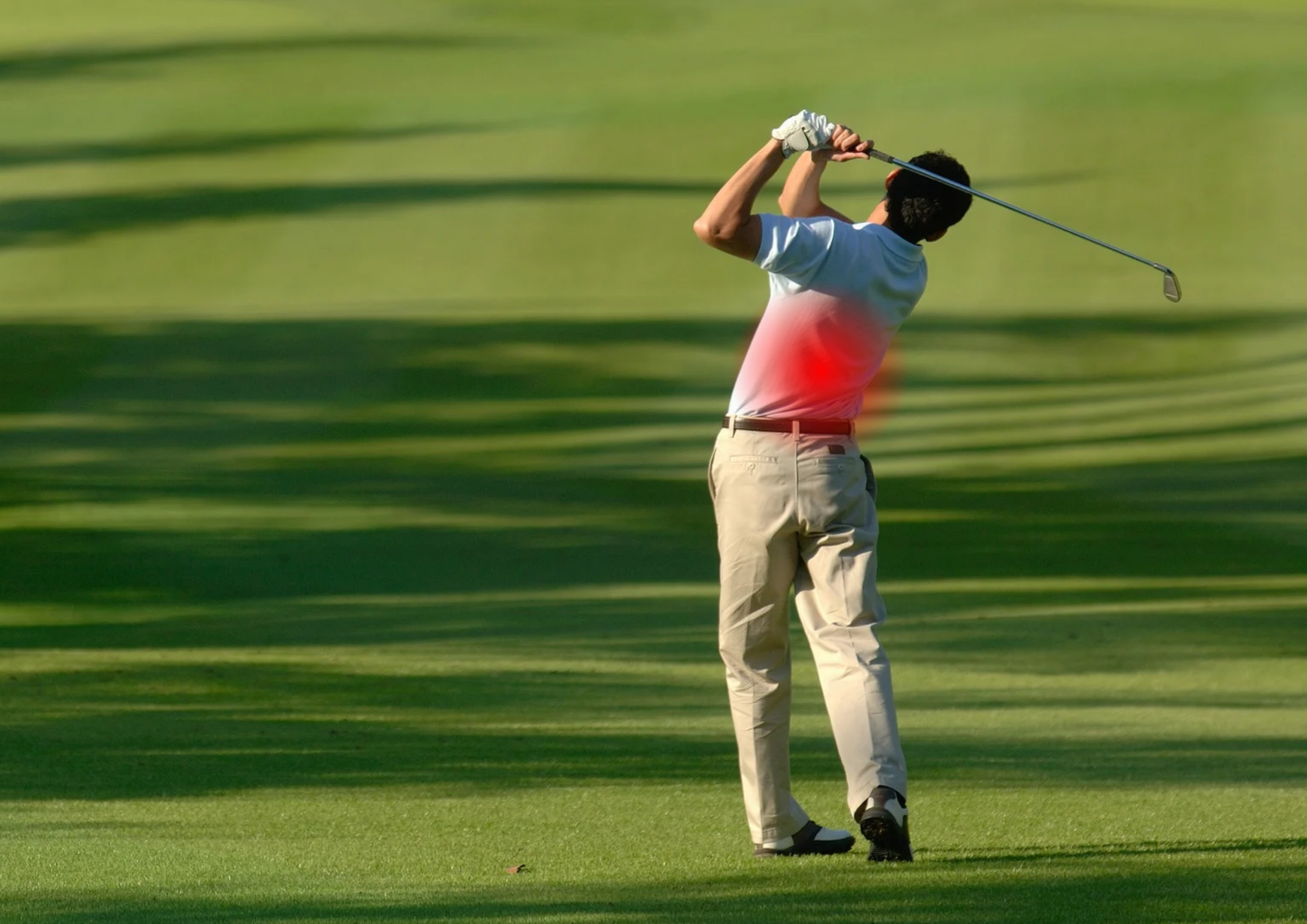
If you play golf and you've dealt with low back pain, someone has probably told you that your swing is too hard on your spine. Maybe they said you need to shorten your backswing. Maybe they told you to stop twisting so much. Maybe they suggested you take a break from the game entirely until the pain settles down. I want to offer a different perspective, because in most cases, the rotation itself isn't the problem.
What's Actually Happening in the Golf Swing
The golf swing demands a significant amount of rotational range of motion, particularly through the thoracic spine and the hips. When that range of motion is available and the muscles that control it are strong, the spine handles the load of a golf swing just fine. Millions of rounds of golf get played every year without back injuries. The problem shows up when rotation is restricted somewhere in the chain and the body finds workarounds. The most common one is the lumbar spine picking up the rotational demand that the thoracic spine or hips should be handling. The low back is not designed to be the primary source of rotation in the swing. When it becomes that, over hundreds of repetitions across a round, it accumulates load it was never built to sustain. So the swing isn't the problem. The restricted rotation somewhere else in the chain is the problem. The swing is just how the problem expresses itself.
The Two Most Common Culprits
Limited thoracic rotation is the first and most common driver. The mid and upper back is where the swing should originate rotationally. When that area is stiff, which it tends to become in people who sit for large parts of their day, the low back compensates on every single swing. Limited hip mobility is the second. The lead hip in the downswing needs to clear and rotate. When it can't, the low back again picks up the slack. Golfers with restricted lead hip mobility often develop pain on the anterior hip as well as low back symptoms from the same underlying restriction. In most cases, addressing these two areas through targeted mobility and strength work produces more improvement than anything else. Not because the exercises are magic, but because they actually address the pattern that's loading the low back incorrectly.
What Doesn't Work and Why
Resting from golf is sometimes appropriate in an acute flare. But rest doesn't build thoracic mobility or hip strength. It just lets symptoms calm down enough that you can go back and reload the same dysfunctional pattern. That's the cycle that keeps golfers stuck for years. A swing coach can help with mechanics, but if the underlying mobility and strength deficits are still there, mechanics work has a ceiling. The body will default back to what it can access. Change what the body can access, and the mechanics often improve on their own. If back pain has been limiting your golf and rest has been your primary strategy, there's almost certainly more you can do.
Ready to stop managing pain and start rebuilding?
If you're a golfer in the Overland Park area dealing with recurring back or hip pain, book a free consult and let's actually identify what's driving it.
Book your free consult here.

